AI Won’t Just Predict Heatwaves – It Will Change How We Manage Them
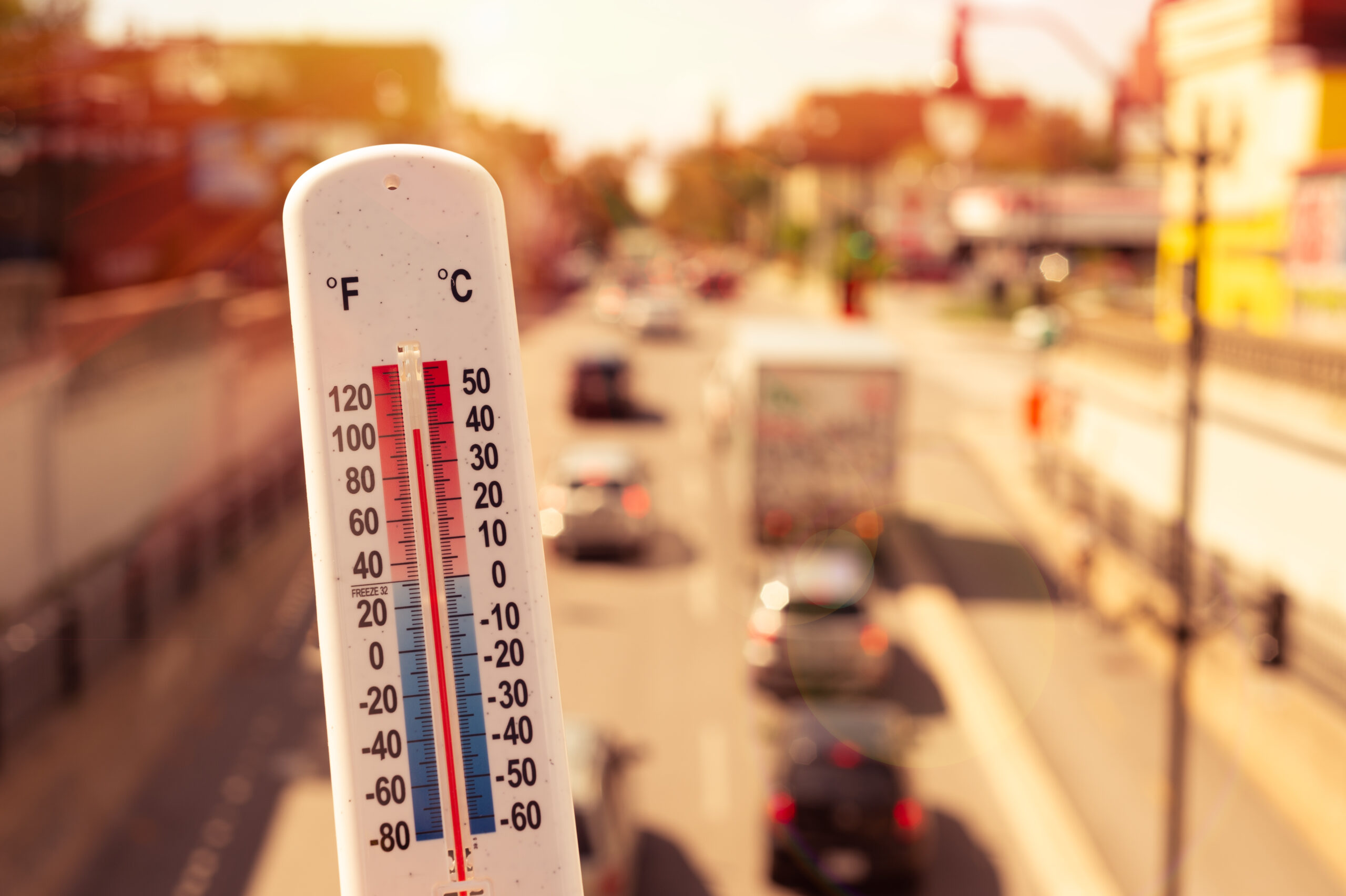
Heatwaves are becoming one of the clearest examples of how climate change is shifting from an abstract threat to a tangible societal risk. At the same time, a new generation of AI models is emerging that can do more than improve weather forecasting — they can help societies act before the consequences become critical.
That marks an important shift. The question is no longer simply whether we can predict rising temperatures. The real question is whether we can understand when heat becomes dangerous, where it will hit hardest, and which actions need to be taken before the consequences become a problem for healthcare systems, municipalities, energy infrastructure and public services.
From Forecasting to Risk Intelligence
Traditional weather forecasting is built on physics, observations and large numerical models. That foundation remains essential, but AI is rapidly taking a more active role in the process. Driven by better satellite data, increased computing power and more advanced AI models, development is accelerating far faster than it was just a few years ago.
The shift is no longer just about delivering raw forecast data. AI can contribute faster processing, stronger pattern recognition and more locally adapted insights.
That is particularly important when it comes to heatwaves. High temperatures do not become dangerous in exactly the same way everywhere. Urban environments often intensify heat through urban heat islands, while coastal conditions, wind patterns and soil moisture all affect how heat is experienced and what consequences it creates. A regional temperature forecast therefore often misses what matters most on the ground: where people are actually at risk.
This is where AI can make a meaningful difference. Models can combine weather data with local patterns, historical incidents, population movement and vulnerability data to create a more operational understanding of risk. Instead of simply saying “it will be hot,” systems can identify which areas are most likely to experience severe impact and where preventative action is needed first.
The real question is no longer whether we can see heatwaves coming. It is whether we understand what they mean before they become a crisis.
From Weather Forecasting to Consequence Intelligence
AI is no longer a future scenario in meteorology. Major weather organizations are already using AI to improve forecasts, accelerate ensemble calculations and increase regional precision.
That does not mean traditional meteorology is disappearing. On the contrary, the most likely future is a hybrid model where physics-based forecasting and AI complement each other. One provides structure and explainability. The other provides speed and the ability to identify patterns across massive datasets.
But the most important shift is not really about producing better forecasts. It is about making forecasts operational.
For heatwaves, that becomes especially important because the consequences are often shaped by small local variations. The same temperature can create completely different outcomes depending on population density, green spaces, ventilation, healthcare strain or how many people are spending time outdoors.
That is why the industry is moving from meteorology toward consequence intelligence. Forecasts are no longer just about temperature — they become decision support systems.
Municipalities can prepare additional public services. Healthcare providers can anticipate higher levels of heat stress. Schools and elderly care facilities can adapt routines. Beaches can issue warnings faster. Energy providers can predict spikes in demand.
The real challenge is therefore not only producing better forecasts, but building systems where data, analysis and decision-making are connected in real time.
Why Heatwaves Are So Difficult
Heatwaves are complex because they are not simply a temperature problem. They are influenced by an entire ecosystem of factors: soil moisture, wind movement, urban density, healthcare capacity and how people move through cities and public spaces.
That is also why the problem is so well suited for AI-supported analysis. Traditional forecasting models are extremely good at describing atmospheric behavior, but less precise when predicting consequences in a specific local context. AI, on the other hand, excels at identifying patterns across large and mixed datasets.
Two locations can experience exactly the same temperature. But if one has a larger elderly population, fewer green spaces and overcrowded public areas, while the other is better adapted for heat, the risk profile becomes entirely different. Those are precisely the kinds of differences AI can help identify earlier.
AI Will Not Replace Human Judgment
At the same time, there is a risk of overselling the technology. AI will not replace human judgment, local expertise or clear operational routines. A model may identify elevated risk, but people still need to decide whether to close a beach, increase staffing or issue public warnings.
Extreme weather events are also difficult precisely because they are rare. That means models can become less reliable in the moments that matter most. The most effective systems will therefore likely remain supportive rather than fully autonomous, combining AI with satellite data, sensor networks, local observations and meteorological expertise.
AI is not the solution itself. It is an amplifier of decisions.
Data Will Define the Winners
The biggest bottleneck is often not the algorithm, but the data itself. More accurate heatwave prediction requires more sensors, stronger observational data and better local data infrastructure.
The more high-quality measurement points and incident data available, the more capable the models become.
That means future leaders will not simply be the organizations building the smartest AI models. They will also be the ones building the strongest data infrastructure and the shortest path from forecast to action.
For Sweden and the Nordics, this creates a particularly strong strategic opportunity. The combination of high digital maturity, strong public-sector data and growing climate adaptation needs creates ideal conditions for solutions that are not only technologically advanced, but operationally useful.
The Next Competitive Advantage
The biggest transformation AI brings to weather forecasting is therefore not primarily technical — it is organizational. The organizations that succeed will not only have better models. They will have a stronger ability to turn forecasts into action before consequences escalate.
As climate change makes extreme weather an increasingly normal part of everyday life, the ability to translate data into action becomes a critical societal capability.
In the future, the competitive advantage will not simply be predicting extreme weather events. It will be acting on them faster than others.
Want to build smarter systems to predict and manage risk? Talk to us.